
Department of Biomedical Engineering
The Faculty of Mechanical Engineering at the University of Belgrade is the only faculty in the Republic of Serbia with an established Department of Biomedical Engineering.
Vision
The Department of Biomedical Engineering at the Faculty of Mechanical Engineering, University of Belgrade, leads the application of engineering knowledge and new technologies in biomedicine. Through undergraduate, master’s, and doctoral study programs, we advance healthcare, diagnostics, and clinical care, while simultaneously reducing costs and the burden on the healthcare system.
Our vision is based on the excellence of personnel, innovative multidisciplinary research, and educational programs focused on new discoveries in biomedical engineering.
Mission
- Providing quality, multidisciplinary training to students that will enable them to be leaders and innovators in biomedical engineering.
- Developing engineering solutions for ensuring the quality of life and health of people, as well as recognizing the future needs of society.
- Close cooperation with medical institutions to identify important problems that affect human health and solving them using our technical expertise.
Laboratory, research, teaching and news
Instrumentation
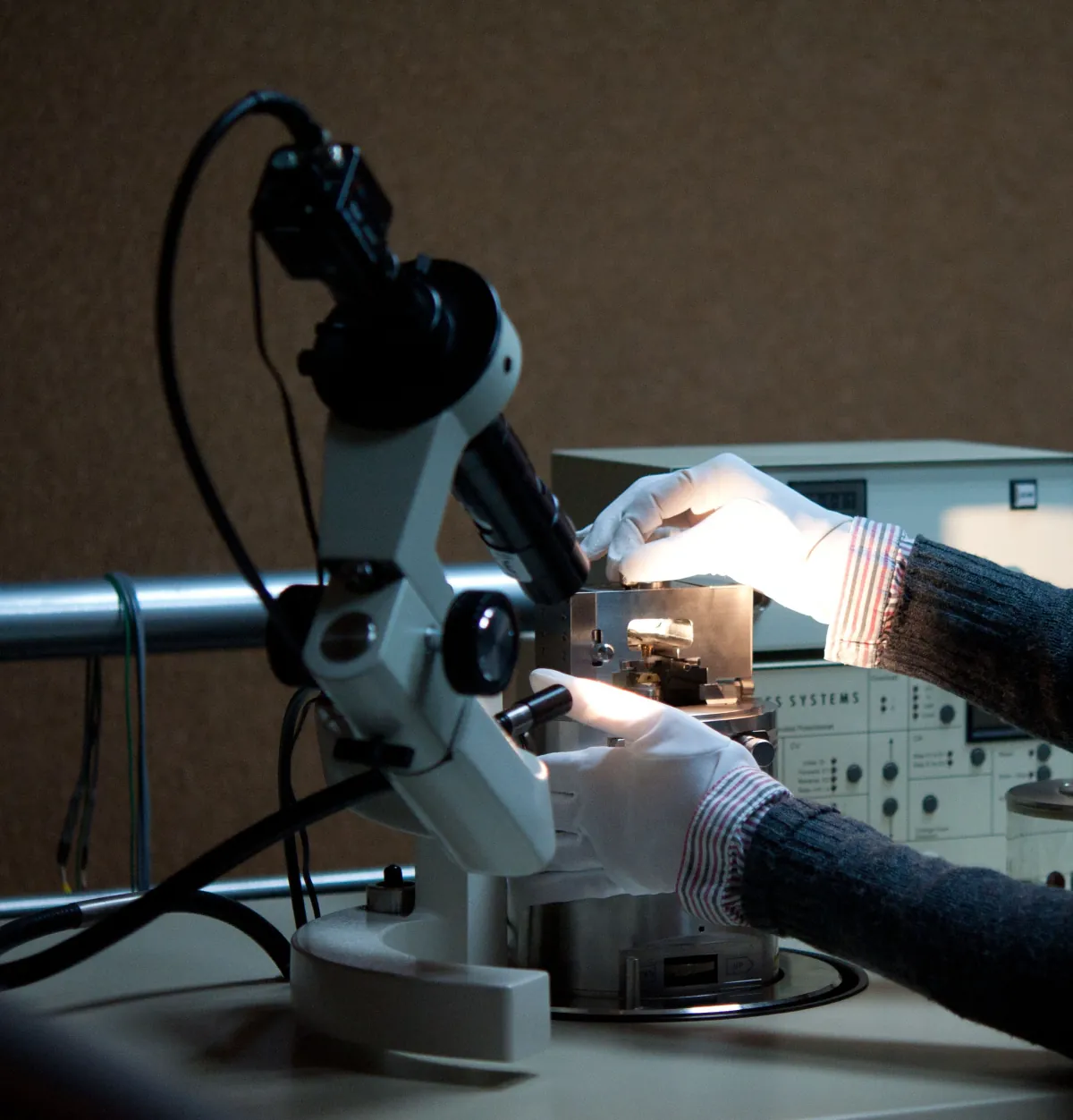
Nanolab is a laboratory for advanced material characterization, equipped with modern instrumentation that enables research across a wide range of scientific disciplines.
| Model | Instrument | Range / technique | Manufacturer |
|---|---|---|---|
| JSPM 5200 | Scanning Probe Microscope | STM · AFM · MFM | JEOL |
| Lambda 950 | UV/Vis/NIR Spectrophotometer | 175-3300nm | Perkin Elmer |
| Spotlight 400 | FTIR Microspectroscopy System | 7800-600 cm−1 | Perkin Elmer |
| JFC-1300 | Auto Fine Coater | sample preparation for SEM · STM · AFM · MFM | JEOL |
Laboratory for Engineering of Early Cancer Diagnosis
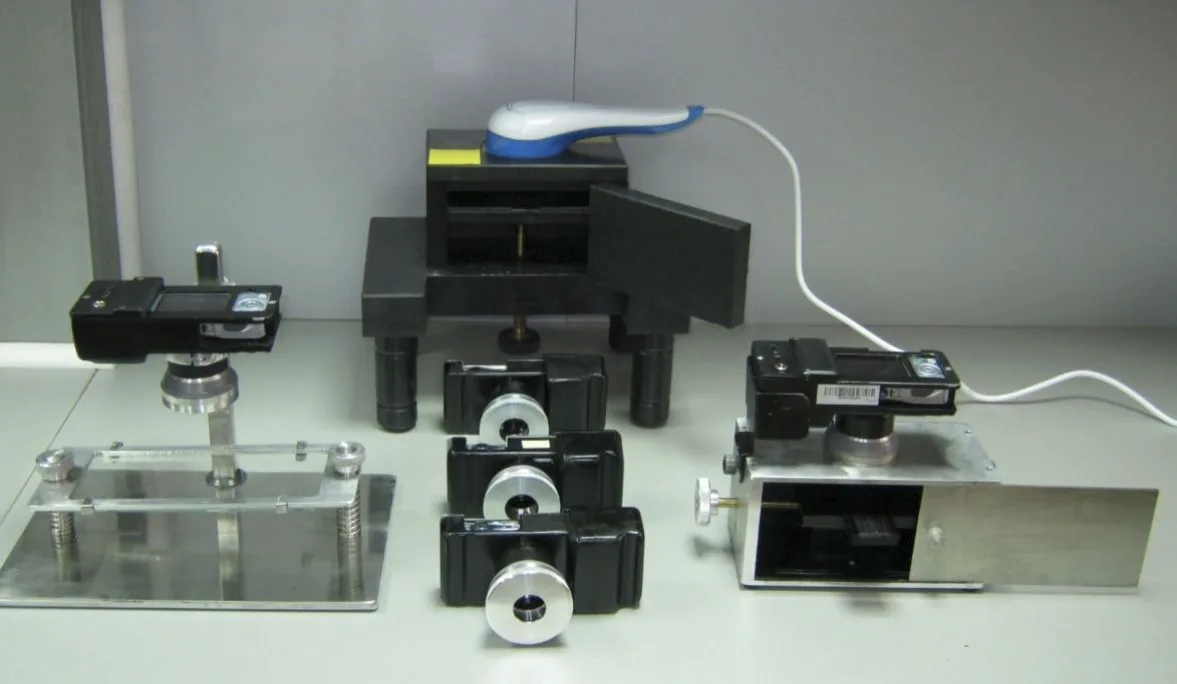
The Department of Biomedical Engineering developed and patented the Optomagnetic Imaging Spectroscopy (OMIS) method, authored by Dr. Đuro Koruga, retired Full Professor, and Dr. Aleksandar Tomić, Scientific Associate, which provides significant contributions to the characterization of materials, with an emphasis on biological materials.
Today, this method, in its improved form, with new hardware and software solutions, achieves significant and high accuracy rates in detecting various types of cancer.
Results in early cancer detection
scale 70–100%| Tissue | Position on the scale | Result |
|---|---|---|
| Skin – in vivo: | 90-92% | |
| Cervix – in vitro (PAP II – PAP V slides): | 94-96% | |
| Colon tissues – ex vivo: | 92-96% | |
| Oral cavity – in vitro: | 82-84% | |
708090100 |
Source: Laboratory for Engineering of Early Cancer Diagnosis
-
Medical engineering began at the Faculty of Mechanical Engineering in Belgrade back in 1977, initiated by Professor Vlastimir Novaković, to meet the needs of the then medical device industry in Yugoslavia.
-
In the mid-80s
on the initiative of Professors Ljubomir Grujić and Đuro Koruga, a course called Bioautomatics was introduced within the Department of Automatic Control
-
In the mid-90s
postgraduate and specialized studies in bioengineering were launched.
-
In 2006, these studies evolved into regular studies, also under the leadership of Professor Đuro Koruga, as a module for biomedical engineering within the Department of Automatic Control.
-
After twelve years, the module transformed into the Department of Biomedical Engineering (BMI) in 2018, under the leadership of Professor Lidija Matija.